Mountain Chinook Wind Emergency Roof Tarping in Colorado Springs, CO
24/7 mountain Chinook wind roof tarping dispatch in Colorado Springs, CO. Engineered 10-mil woven poly tarps, 2x4 lumber battens, and ballast stabilization rated for 90+ MPH Front Range wind shear.
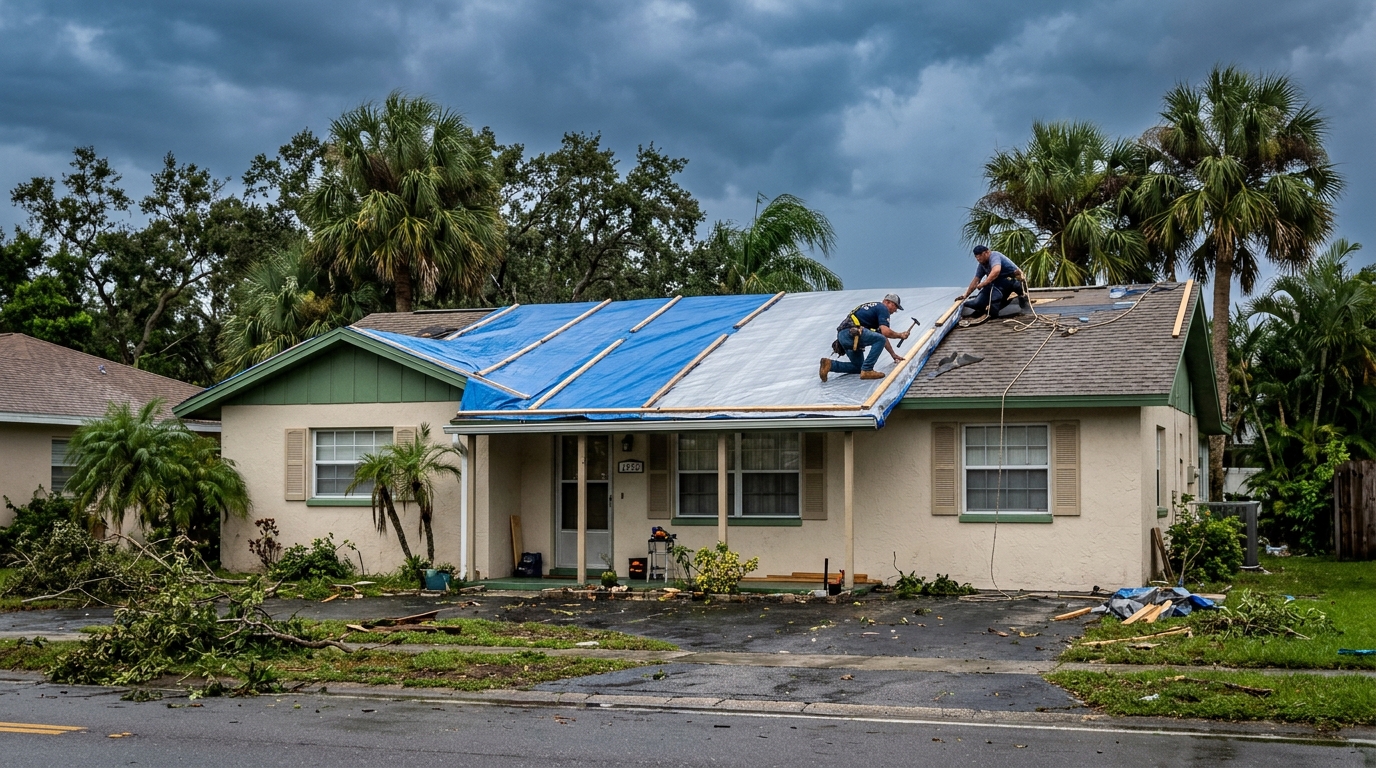
Engineered High-Wind Tarping for Colorado Downslope Mountain Winds
When severe downslope Chinook windstorms scream down the eastern face of the Rocky Mountains, wind gusts exceeding 80 to 100+ MPH routinely rip shingles, ridge caps, and underlayments clean off Colorado Springs rooftops. Ordinary hardware-store tarps nailed directly through shingle surfaces tear apart within hours under intense Front Range wind turbulence, creating dozens of new leak penetrations in sound decking. Our emergency dispatch network connects property owners with specialized roofing crews skilled in engineered high-wind roof tarping protocols that protect structural building envelopes until permanent insurance restoration can be completed.
1 Downslope Chinook Wind Dynamics & Rampart Range Topography
Colorado Springs occupies a unique geographic position directly below Pikes Peak (14,115 ft) and the Rampart Range. Atmospheric gravity waves produced by stable air cresting the Continental Divide plunge down the eastern slopes, compressing and accelerating as they exit narrow canyons such as Ute Pass, Bear Creek Canyon, and Cheyenne Canyon. These downslope Chinook wind events generate intense negative pressure vortexes (aerodynamic suction) along roof ridges, eaves, and gable overhangs. Standard asphalt shingle sealant strips fatigue under repeated high-frequency buffeting, causing large sections of shingles to detach instantaneously.
2 10-Mil Woven Poly Membrane & 2x4 Lumber Batten Anchoring
To counter fierce mountain winds, dispatched crews utilize heavy-duty, UV-stabilized 10-mil woven polyethylene tarps engineered for commercial weatherproofing. Instead of puncturing the center of the tarp, technicians wrap the perimeter edges twice around commercial-grade spruce 2x4 lumber battens. These battens are mechanically fastened into structural roof rafters using heavy-gauge lag screws through existing shingle gaps, clamping the tarp in uniform tension across the damaged substrate. This creates a drum-tight seal that eliminates wind fluttering, preventing the destructive mechanical fatigue that shreds lightweight tarps.
3 Over-the-Ridge Tension Clamping & Sandbag Ballasting
Where damage approaches the ridge crest, contractors avoid terminating tarps on windward slopes where updrafts can catch the top edge. Crews pull the tarp completely over the ridgeline onto the leeward slope, fastening the upper batten well below the peak. On tile roofs (such as concrete S-tiles or clay barrel tiles common in Broadmoor and Rockrimmon), mechanical fastening through tiles would crack expensive assemblies. Crews utilize non-penetrating synthetic webbing anchor straps weighted with gravel ballast sandbags placed strategically along hip and ridge courses to hold protective membranes firmly in place without breaking fragile tiles.
4 PPRBD Compliance & Insurance Claims Documentation
Property insurance policies require policyholders to execute immediate reasonable measures to mitigate ongoing storm damage—commonly referred to as the duty to prevent secondary losses. Emergency tarping performed by licensed roofing professionals fulfills this contractual duty. Dispatched contractors compile rigorous photographic evidence before, during, and after tarp deployment, measuring damaged areas, documenting structural framing exposure, and providing itemized mitigation invoices formatted in industry-standard Xactimate coding for direct carrier reimbursement.
✓ Seasonal Freeze-Thaw Resilience & UV Degradation Defense
At over 6,000 feet elevation, ultraviolet solar radiation degrades standard plastic tarps in less than three weeks, causing polymer embrittlement and fiber shredding. The commercial tarps deployed by our network feature advanced carbon-black UV inhibitors capable of enduring months of high-altitude sun exposure. Furthermore, thermal welds and perimeter seals are engineered to remain flexible at sub-zero Colorado winter temperatures, preventing cold-cracking during severe mountain freezes and heavy late-season snow accumulations.
Key Engineering & Statutory Compliance Highlights
- PPRBD Contractor License Verification: Every dispatched roofing crew operates under an active Class A, B, or C supervisor registration with the Pikes Peak Regional Building Department.
- ASTM D1970 Ice Barrier Mandate: Full continuous application of self-adhering modified bitumen underlayment on all roof eaves extending 24 inches past interior heated walls.
- 130 MPH Wind Uplift Fastening: Enhanced 6-nail fastening schedule engineered to resist severe downslope mountain Chinook gusts.
- Zero Form Friction: Direct live phone coordination with zero digital waiting or automated form submission delays.
- Colorado SB 12-038 Compliance: Strict adherence to Colorado consumer protection statutes prohibiting insurance deductible rebates.
Frequently Asked Questions About Emergency Roof Tarping
How long can an engineered high-wind emergency roof tarp safely remain in place?
Our dispatched contractors install heavy 10-mil UV-stabilized poly membranes secured with anchored 2x4 battens designed to withstand 90+ MPH mountain wind gusts and Colorado UV radiation for up to 90 to 120 days. This provides ample time to coordinate insurance adjuster scoping, acquire PPRBD building permits, and schedule full roof replacement.
Will emergency tarp installation cause permanent damage to surrounding sound shingles?
No. Skilled contractors fasten lumber battens through existing damaged shingle valleys or under overlapping courses directly into rafters. When work is completed, all anchor penetration points are permanently sealed or fully replaced during the subsequent restoration phase, ensuring zero collateral damage.
Can you safely tarp a concrete tile or Spanish clay tile roof without cracking tiles?
Yes. Tile roofs require specialized non-penetrating harness ballasts. Rather than driving screws through brittle tiles, crews roll the tarp over ridges and anchor it with padded canvas sandbags and ridge clamping rigs, completely preventing tile breakage while providing 100% weather protection.