Flat Roof Ponding Repair & Tile Ridge Realignment in Colorado Springs, CO
24/7 low-slope ponding water repair and concrete tile ridge realignment dispatch in Colorado Springs, CO. TPO/EPDM membrane thermal welding, scupper drainage, and tile mortar reset.
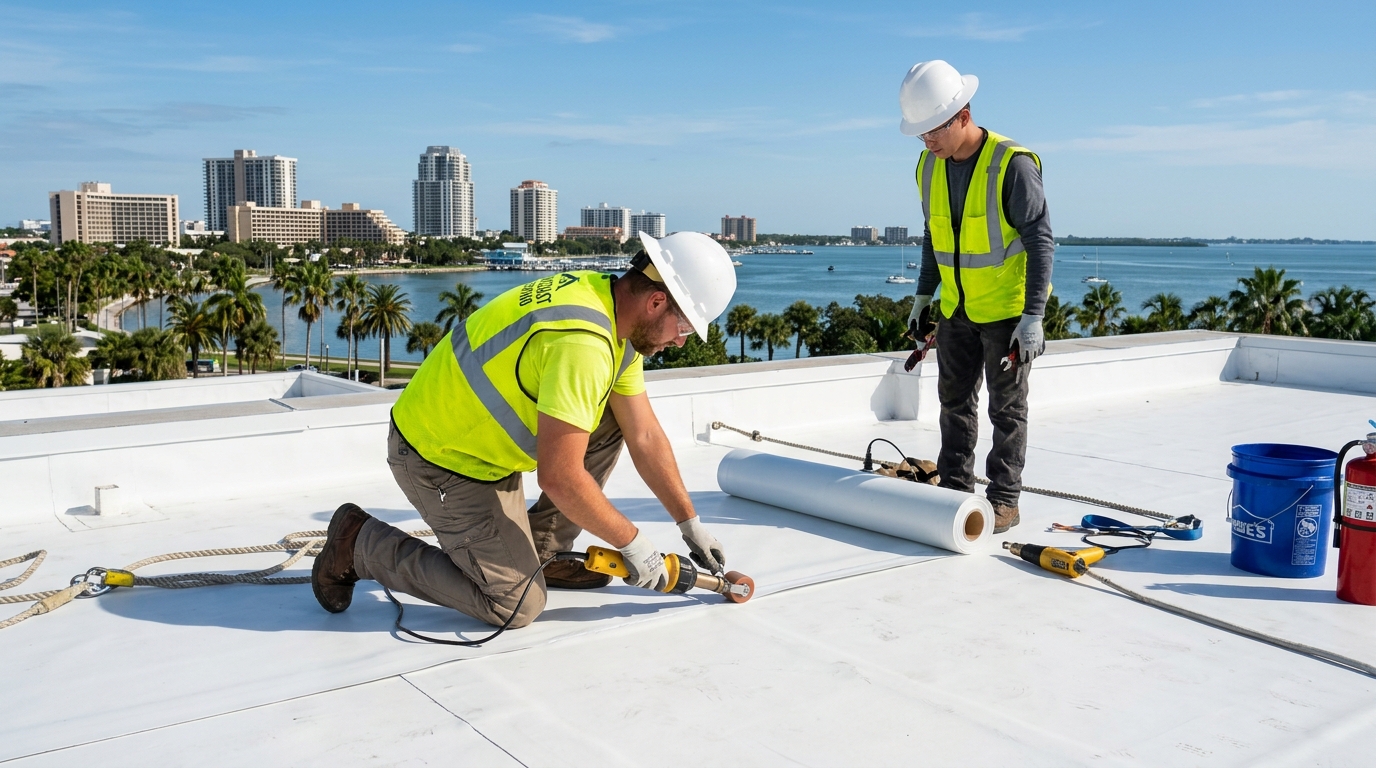
Specialized Low-Slope Membranes & High-Wind Tile Engineering
Commercial buildings, modern residential estates in Kissing Camels, and patio home additions across Colorado Springs frequently incorporate low-slope or flat roofing assemblies alongside architectural concrete and Spanish clay tile systems. Low-slope roofs face unique challenges in our mountain climate: standing pond water freezes into thick ice sheets in winter, while drainage scuppers clog with ponderosa pine needles. Simultaneously, high-velocity Chinook winds dislodge tile ridges and hip caps. Our independent emergency dispatch network routes experienced commercial membrane and tile roofing mechanics across El Paso County 24/7.
1 The 48-Hour Ponding Water Threshold & Structural Deflection
Under National Roofing Contractors Association (NRCA) and PPRBD standards, a roof is considered ponding if standing water remains on the membrane 48 hours after precipitation ceases under normal evaporation conditions. In Colorado Springs, ponding water accelerates membrane aging, degrades seam adhesives, and exerts extreme structural dead-load weight (standing water weighs 5.2 pounds per square foot per inch of depth). When winter freezes turn ponding water into expanding ice slabs, the expanding ice shears flashing edges and tears mechanical attachment points.
2 TPO & EPDM Thermal Seam Welding & Patch Protocols
For thermoplastic polyolefin (TPO) and ethylene propylene diene monomer (EPDM) membrane roofs, temporary adhesives dissolve rapidly in standing water. Dispatched technicians utilize robotic and handheld hot-air heat welders operating at 900°F to 1,000°F to fuse reinforced TPO patches directly into the base sheet at a molecular level. For EPDM rubber membranes, technicians apply heavy-duty butyl splice tape primed with structural polymer activators, followed by continuous EPDM lap sealant beads along every exposed edge to withstand continuous hydrostatic submersion.
3 Drainage Scupper Clearing, Siphon Pumps & Crickets
Ponding is frequently caused by inadequate drainage design or obstructed runoff points. Heavy winds blow pine needles, leaves, and storm debris into internal drains and parapet scupper boxes. Dispatched emergency crews clear clogged drainage pathways, install heavy-duty cast-iron strainer domes, and deploy commercial siphon pumps to extract thousands of gallons of trapped storm water. Where structural sagging creates permanent low spots, contractors engineer tapered polyisocyanurate (polyiso) insulation crickets to redirect water toward active scuppers.
4 Concrete & Clay Tile Ridge Realignment & Mechanical Tie-Downs
Many luxury homes in the Broadmoor, Peregrine, and Mountain Shadows neighborhoods feature heavy concrete or Spanish barrel clay tile roofs. While tile bodies can last 50+ years, downslope Chinook windstorms exceeding 90 MPH vibrate ridge and hip cap tiles loose. Once the mortar bed cracks and separates, cap tiles shift out of alignment or slide down the roof, exposing the ridge apex to torrential rain. Dispatched tile artisans remove compromised mortar, realign displaced tiles, and secure them using stainless steel mechanical storm clips and polymer-modified fiber-reinforced mortar.
✓ PPRBD Commercial Low-Slope Insulation & Energy Mandates
Under Pikes Peak Regional Building Department commercial energy codes (adopting International Energy Conservation Code - IECC standards), low-slope roof replacements must achieve strict continuous insulation R-values (typically R-30 or higher) and meet Cool Roof thermal reflectance ratings to reduce urban heat island effects. Dispatched contractors ensure all membrane repairs and structural re-roofs comply fully with El Paso County insulation requirements, providing long-term energy efficiency alongside robust weather defense.
Key Engineering & Statutory Compliance Highlights
- PPRBD Contractor License Verification: Every dispatched roofing crew operates under an active Class A, B, or C supervisor registration with the Pikes Peak Regional Building Department.
- ASTM D1970 Ice Barrier Mandate: Full continuous application of self-adhering modified bitumen underlayment on all roof eaves extending 24 inches past interior heated walls.
- 130 MPH Wind Uplift Fastening: Enhanced 6-nail fastening schedule engineered to resist severe downslope mountain Chinook gusts.
- Zero Form Friction: Direct live phone coordination with zero digital waiting or automated form submission delays.
- Colorado SB 12-038 Compliance: Strict adherence to Colorado consumer protection statutes prohibiting insurance deductible rebates.
Frequently Asked Questions About Flat Roof Ponding Repair
How much structural weight does ponding water add to a Colorado flat roof?
One inch of ponding water weighs approximately 5.2 pounds per square foot. A 20-foot by 20-foot ponding area with three inches of standing water adds over 6,200 pounds of concentrated dead weight to roof trusses, causing structural framing sagging and imminent roof collapse hazards.
Can displaced concrete or clay ridge tiles be repaired without replacing the whole roof?
Yes. Dispatched tile craftsmen carefully remove loose ridge and hip caps, chip away fractured mortar beds, install heavy-duty stainless steel wind clips, and reset the tiles in high-strength polymer-modified mortar matched to existing architectural colors.
Why do low-slope roof seams fail more frequently during winter in Colorado Springs?
During winter, melting snow accumulates in ponding depressions and refreezes each night into expanding ice lenses. Water expands by roughly 9% upon freezing, exerting massive lateral wedge forces that pry glued EPDM and TPO seam laps apart.